
Introduction
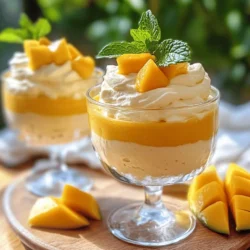
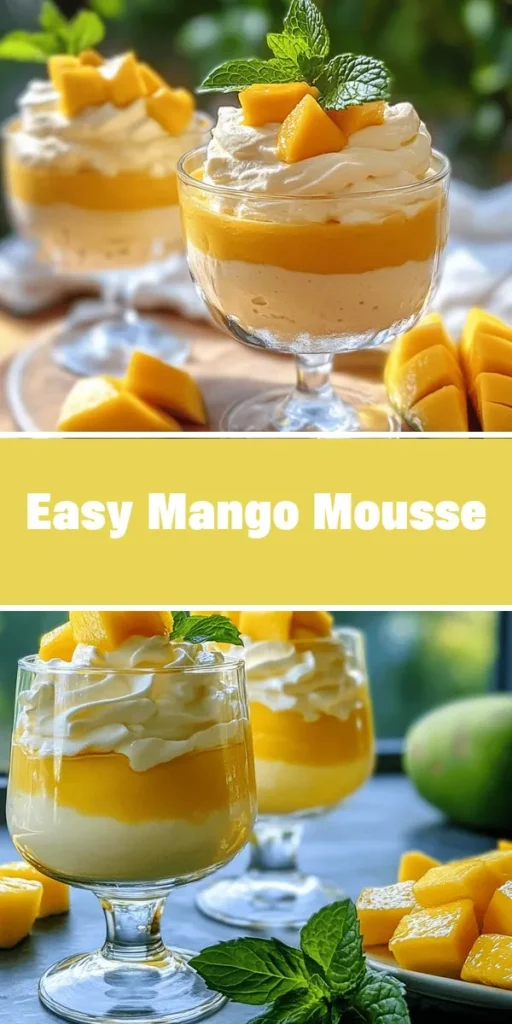
Discover the delightful world of desserts with our Easy Mango Mousse recipe. This light and airy treat captures the tropical essence of ripe mangoes, making it a perfect choice for any occasion. With a creamy texture and a refreshing flavor, this mousse is not just a dessert; it’s a celebration of summer in every bite. Whether you’re hosting a dinner party, celebrating a special occasion, or simply indulging yourself, this recipe is sure to impress.
Mango mousse is a beloved dessert in various cultures, celebrated for its simplicity and vibrant flavor. Originating from France, mousse translates to “foam,” which perfectly describes the light and fluffy texture that makes this dessert so appealing. The use of mango not only adds a sweet and tangy flavor but also a stunning golden hue that enhances the visual appeal.
This Easy Mango Mousse recipe eliminates the complexity often associated with traditional mousse-making, allowing you to create this luscious dessert with minimal effort. In just a few simple steps, you can enjoy a refreshing finish to any meal, or even a delightful treat on its own.
Understanding Mango Mousse
Exploring the Origins and Appeal of Mango Mousse
Mango mousse has gained popularity across the globe, especially in tropical regions where mangoes are abundant. The combination of the smooth, rich mango puree with the airy whipped cream creates a unique texture that is both indulgent and light. This dessert encapsulates the essence of summer, making it a go-to choice for warm-weather gatherings and celebrations.
The appeal of mango mousse lies not only in its taste but also in its versatility. It can be served in individual cups for a sophisticated presentation or in a large bowl for casual gatherings. Its bright color and light texture make it an attractive addition to any dessert table, and it pairs beautifully with a variety of garnishes, such as fresh fruit, whipped cream, or mint leaves.
Benefits of Mango as a Key Ingredient
Mangoes are not just delicious; they are also packed with nutrients. This tropical fruit is rich in vitamins A and C, providing antioxidant properties that are beneficial for the immune system and skin health. Additionally, mangoes are high in fiber, which aids digestion and promotes a healthy gut.
Incorporating ripe mangoes into your dessert not only enhances the flavor but also adds a nutritional boost. When making mango mousse, the natural sweetness of ripe mangoes means you can use less added sugar, making it a healthier dessert option compared to many other options.
The Versatility of Mousse as a Dessert Choice
Mousse, in general, is an incredibly versatile dessert that can be made with a variety of flavors and ingredients. From chocolate to fruit purees, the possibilities are endless. This adaptability makes mousse a fantastic option for any occasion, allowing you to tailor the flavor profile to suit your preferences or the theme of your event.
Moreover, mousse can be adjusted to accommodate different dietary needs. For instance, you can create a dairy-free version by substituting heavy cream with coconut cream, or make it vegan by using aquafaba (the liquid from canned chickpeas) as a replacement for whipped cream. The Easy Mango Mousse recipe we present here is straightforward and can easily be modified to suit various tastes and dietary restrictions.
Ingredients Overview
Highlighting the Essential Ingredients for Easy Mango Mousse
To create the perfect Easy Mango Mousse, it’s important to gather the essential ingredients that will contribute to its creamy texture and delightful flavor. Here’s a breakdown of what you’ll need:
1. Ripe Mangoes: The star ingredient of this dessert, ripe mangoes provide the primary flavor and texture. Choose mangoes that are soft to the touch and emit a sweet aroma. The riper the mango, the more flavorful your mousse will be.
2. Heavy Whipping Cream: This ingredient is crucial for achieving the light and airy texture characteristic of mousse. When whipped, heavy cream adds volume and richness, creating a luxurious mouthfeel.
3. Sweetened Condensed Milk: This ingredient adds sweetness and creaminess to the mousse, balancing the tangy flavor of the mangoes. It also helps to stabilize the mixture.
4. Vanilla Extract: A splash of vanilla enhances the overall flavor of the mousse, adding a warm note that complements the mango.
5. Lemon Juice: A small amount of lemon juice brightens the flavor and adds a refreshing tang, elevating the tropical taste of the dessert.
6. Optional Gelatin: If you prefer a firmer texture, adding gelatin can help set the mousse. However, it is not necessary for a delightful outcome and can be omitted if you prefer a lighter mousse.
7. Fresh Mint Leaves for Garnishing: Mint leaves not only add a pop of color but also provide a refreshing contrast to the sweetness of the mango mousse.
The Role of Ripe Mangoes in Flavor and Texture
Selecting the right mangoes is paramount to the success of your Easy Mango Mousse. The best mangoes for this recipe are those that are perfectly ripe; they should feel soft to the touch but not overly mushy. Varieties like Ataulfo or Haden are excellent choices, as they are known for their sweetness and rich flavor. When blended into a puree, ripe mangoes create a smooth and silky base that forms the heart of your mousse.
Understanding the Importance of Heavy Whipping Cream
Heavy whipping cream is essential for creating the characteristic lightness of mousse. When whipped, it traps air bubbles, resulting in a fluffy texture. For best results, ensure that your cream is chilled before whipping. This will help it achieve maximum volume and stability. Be careful not to overbeat the cream, as this can lead to a grainy texture and may cause the mousse to lose its airy quality.
The Sweetness from Sweetened Condensed Milk
Sweetened condensed milk serves a dual purpose in this recipe: it sweetens the mousse while also contributing to its creamy texture. The syrupy consistency of condensed milk allows it to blend seamlessly with the mango puree and whipped cream, ensuring a smooth and luscious mouthfeel. This ingredient also helps to balance the natural acidity of the mangoes, making for a well-rounded flavor.
The Subtle Enhancement from Vanilla Extract and Lemon Juice
Vanilla extract is a common ingredient in dessert recipes, and for good reason. It adds depth and warmth to the flavor profile of the mousse. A small amount goes a long way, so just a teaspoon is sufficient to enhance the overall taste of the dessert.
Lemon juice, meanwhile, brightens the flavors and adds a hint of tartness that complements the sweetness of the mango. The acidity from the lemon juice helps to elevate the taste, making the mousse feel light and refreshing.
Optional Gelatin: When to Use and Its Impact on Texture
While not a necessary ingredient for Easy Mango Mousse, gelatin can be used to achieve a firmer texture if desired. It is especially useful if you plan to prepare the mousse in advance or if you want to present it in a molded form. To use gelatin, simply dissolve it in warm water and let it cool before incorporating it into the mango mixture. Keep in mind that using gelatin may alter the lightness of the mousse slightly, so it’s best used when a sturdier texture is preferred.
The Aesthetic Appeal of Garnishing with Fresh Mint Leaves
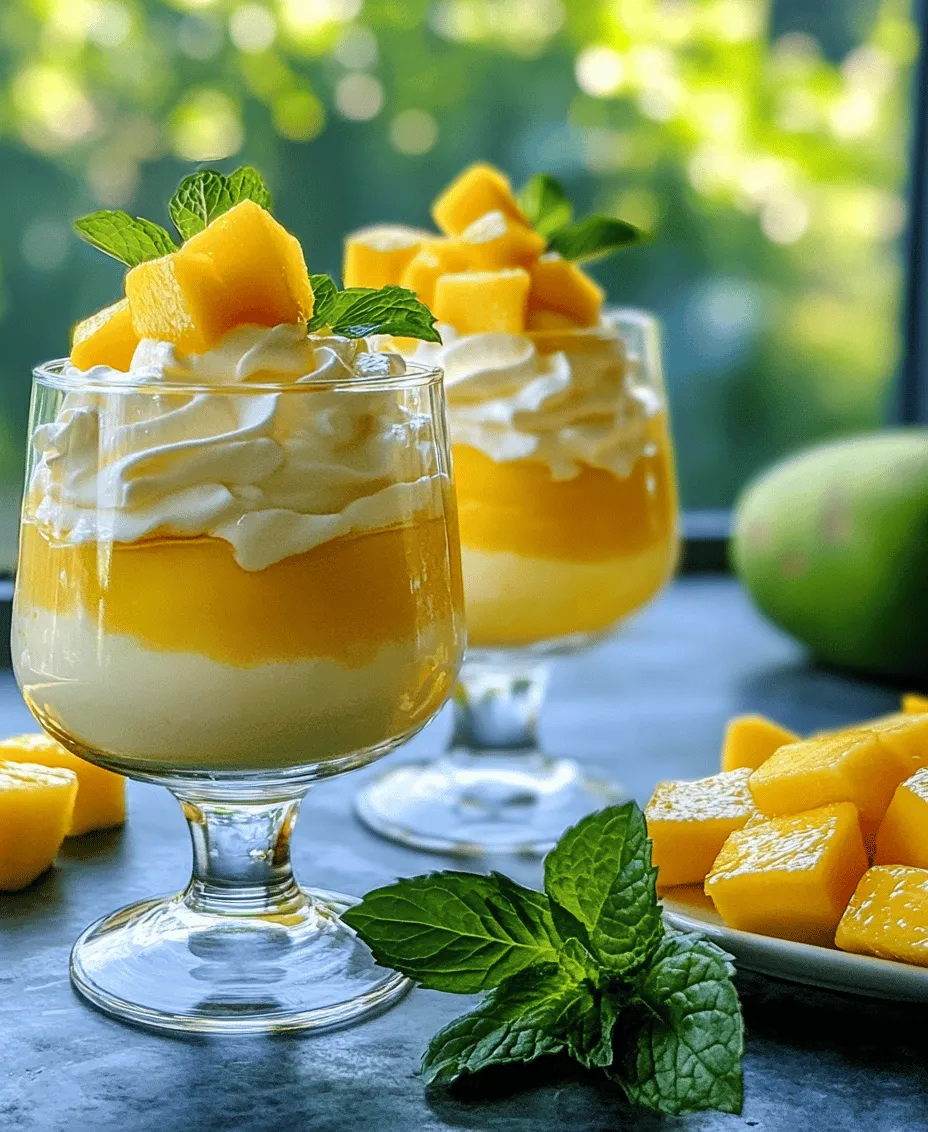
Garnishing your Easy Mango Mousse with fresh mint leaves not only adds a beautiful touch but also enhances the overall flavor experience. The refreshing aroma of mint complements the tropical mango flavor, making each bite more enjoyable. Additionally, the vibrant green of the mint provides a striking contrast against the golden hue of the mousse, making for an eye-catching presentation.
Preparation Process
Step-by-Step Guide to Making the Perfect Mango Mousse
Now that you have a thorough understanding of the ingredients and their roles, let’s dive into the preparation process. Follow these steps to create a delicious Easy Mango Mousse that will delight your guests and satisfy your sweet cravings.
Step 1: Prepping the Mango
Begin by preparing your ripe mangoes. To do this, you’ll want to peel and dice the mangoes. Start by cutting off both ends of the mango, then stand it upright and slice the skin off in downward motions. Once peeled, slice the fruit away from the pit and chop it into smaller chunks.
For optimal smoothness, it is best to blend the mango pieces. Place the diced mango into a blender or food processor, and blend until you achieve a silky puree. Depending on the ripeness of the mango, you may need to add a splash of water to help it blend more easily. Set the mango puree aside for now.
Step 2: Whipping the Cream
Next, it’s time to whip the heavy cream. Pour the chilled heavy whipping cream into a mixing bowl. Using an electric mixer, beat the cream on medium speed until soft peaks begin to form. This typically takes about 2-3 minutes. Keep an eye on the cream to avoid overbeating; you want it to be fluffy and airy, not grainy.
Once you achieve soft peaks, gradually add the sweetened condensed milk, vanilla extract, and lemon juice to the whipped cream. Continue to mix on low speed until everything is well combined. Be careful to fold in the ingredients gently, as you want to maintain the lightness of the whipped cream.
With the cream mixture prepared, you can now incorporate the mango puree. Gently fold the mango puree into the whipped cream mixture using a spatula. This method will help retain the airiness of the whipped cream while evenly distributing the mango flavor throughout the mousse.
By following these steps carefully, you’ll be well on your way to creating a delightful Easy Mango Mousse that brings the taste of summer to your table. Stay tuned for the next part of this article, where we will explore the final steps of the preparation process, including how to set and present your mousse for maximum enjoyment.
Combining Ingredients: The Art of Folding for a Light Texture
Once your whipped cream and mango puree are prepared, it’s time to combine these two key components of your Easy Mango Mousse. The technique you use during this process is essential for achieving a light, airy texture that is characteristic of a good mousse.
1. Start with the Mango Puree: In a large mixing bowl, pour the mango puree you’ve prepared earlier. Make sure the puree is smooth and free of any lumps. If necessary, pass it through a fine sieve to ensure the texture is velvety.
2. Fold in the Whipped Cream: Take a sizable dollop of whipped cream and add it to the mango puree. Using a rubber spatula, gently fold the whipped cream into the puree. The key here is to use a gentle motion—scooping from the bottom of the bowl and lifting the mixture over itself. You want to incorporate the cream without deflating it. Continue to fold until no streaks of whipped cream remain visible.
3. Incorporate Additional Elements: If you are adding any additional flavorings, such as a splash of lime juice or a hint of vanilla extract, do so during this folding process. These ingredients will enhance the flavor profile of the mousse without compromising its lightness.
By carefully folding these ingredients, you ensure that the final mousse maintains its airy texture while being infused with the tropical flavor of mango.
Chilling the Mixture: The Importance of Refrigeration for Setting
Once your mixture is beautifully combined, the next step is chilling it to achieve the perfect consistency. Proper refrigeration is crucial for allowing the mousse to set correctly.
1. Transfer the Mixture: Using your spatula, gently scoop the mango mousse mixture into serving glasses or a large dessert bowl. Ensure that your serving vessels are clean and dry for the best presentation.
2. Cover and Refrigerate: Cover the glasses or bowl with plastic wrap or a lid. Place them in the refrigerator for at least 2 to 4 hours, or until the mousse has set adequately. This chilling time allows the flavors to meld and the mousse to firm up slightly, making it easier to serve.
3. Check for Doneness: After the chilling time, check the consistency of the mousse. It should be light, fluffy, and hold its shape when scooped. If it has not set to your liking, consider leaving it in the fridge for an extra hour.
Serving Suggestions
Creative presentation can elevate your Easy Mango Mousse from a simple dessert to a stunning centerpiece. Here are some ideas to serve your mousse impressively:
1. Ideal Serving Glass Types: Consider using clear glass cups or dessert jars to showcase the vibrant yellow-orange color of the mousse. Tall glasses create a beautiful layered effect if you choose to add a layer of mango puree or crushed cookies at the bottom. Stemless wine glasses or small mason jars can also add a rustic touch to your presentation.
2. Garnishing Options: To enhance the visual appeal, garnish each serving with a slice of fresh mango or a few mint leaves. A sprinkle of toasted coconut or crushed pistachios can add texture and flavor, making your mousse not just a treat for the taste buds but also a feast for the eyes.
3. Pairing Suggestions: Mango mousse pairs incredibly well with a variety of accompaniments. Serve it alongside a refreshing tropical fruit salad, or offer a scoop of coconut sorbet for an added layer of flavor. A drizzle of passion fruit sauce can also complement the sweetness of the mousse beautifully. For a more decadent experience, consider pairing it with chocolate biscotti or a light sponge cake.
Nutritional Information
When indulging in dessert, understanding the nutritional profile can help you enjoy it guilt-free. Here’s a breakdown of the Easy Mango Mousse:
1. Nutritional Profile: A typical serving of mango mousse contains approximately 250 calories, with around 12 grams of fat, 30 grams of carbohydrates, and 20 grams of sugar. The calorie count may vary depending on the quantity of sugar and cream used.
2. Health Benefits of Ingredients: The primary ingredient, mango, is rich in vitamins A and C, contributing to healthy skin and vision. It also contains dietary fiber, which aids digestion. Whipped cream, while higher in fat, adds a creamy texture and a sense of indulgence to the dessert.
3. Understanding Calories and Sugars: While it’s important to be mindful of sugar content, the natural sugars from fresh mangoes provide a healthier alternative to refined sugars. Moderation is key, and this mousse can be enjoyed as part of a balanced diet.
Cultural Significance of Mango
The mango is more than just a delicious fruit; it holds significant cultural importance in many parts of the world.
1. Mango in Various Cuisines: In South Asian cuisine, mangoes are known as the “king of fruits” and are widely used in both savory and sweet dishes. From mango chutney to mango lassi, this fruit is a staple ingredient. In Latin America, it is often enjoyed fresh, in juices, or as a dessert.
2. Symbol of Fertility and Prosperity: In India, mango leaves are often used in wedding ceremonies as a symbol of fertility and prosperity. The fruit is celebrated in various festivals and is considered auspicious, bringing good luck and joy.
3. Popularity of Mango Desserts: Around the globe, mango desserts have gained popularity, from the classic mango sticky rice in Thailand to Brazilian mango mousse. The versatility of mango allows it to blend seamlessly into various culinary traditions, making it a beloved dessert ingredient worldwide.
Conclusion
In conclusion, Easy Mango Mousse is not only a simple dessert to prepare but also a delicious way to enjoy the flavors of fresh mangoes. With its creamy texture and vibrant color, this mousse is sure to be a hit at any gathering. Embrace the joy of making this delightful treat and indulge in its refreshing taste. The combination of sweet and tangy flavors makes it a perfect dessert for all occasions, leaving your guests craving for more. Whether you’re serving it at a summer barbecue, a festive gathering, or simply as a sweet treat at home, Easy Mango Mousse is guaranteed to delight and impress. Create this luscious dessert and let the tropical flavors transport you to a sunny paradise with every spoonful.