
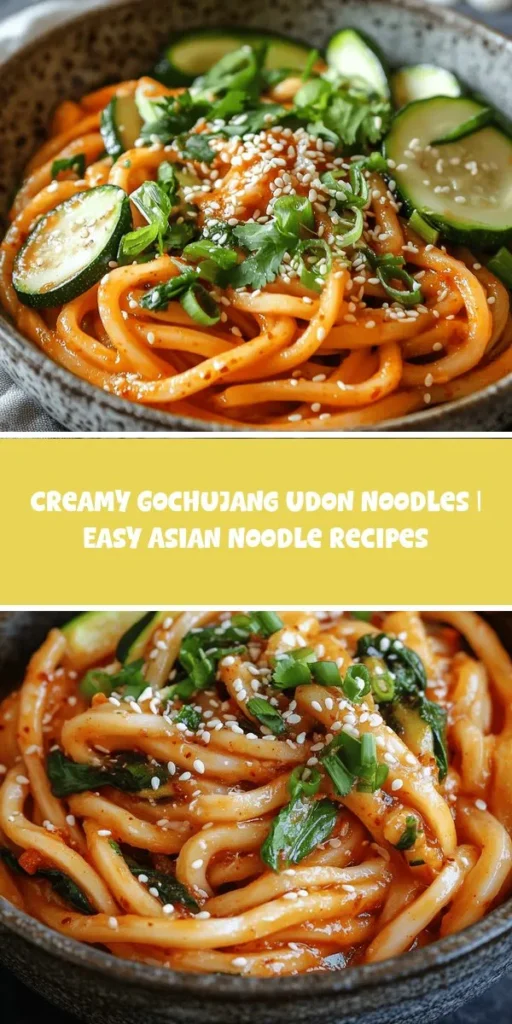
Spicy & Creamy Gochujang Udon Noodles Recipe

WANT TO SAVE THIS RECIPE?

Introduction

Are you ready to tantalize your taste buds with a dish that perfectly balances spice and creaminess? The Spicy & Creamy Gochujang Udon Noodles recipe is a culinary delight that brings together the rich flavors of Korean cuisine with the comforting texture of udon noodles. This dish is not just a meal; it’s an experience that promises to awaken your senses with every bite.

At the heart of this recipe is gochujang, a traditional Korean chili paste that has gained popularity worldwide for its unique combination of heat, sweetness, and umami. Gochujang is more than just a condiment; it’s a cornerstone of Korean cooking, often used to enhance the flavor profile of stews, marinades, and, of course, noodle dishes. Its versatility makes it an essential ingredient for anyone looking to explore the depth of Korean flavors.

What makes this udon noodle dish stand out is the exquisite harmony of spicy and creamy elements. The rich, creamy coconut milk beautifully complements the fiery gochujang, creating a sauce that envelops the udon noodles in a luscious embrace. Whether you’re a spice enthusiast or someone who enjoys a milder flavor profile, this recipe is designed to cater to your palate. Best of all, it can be prepared in just under 30 minutes, making it an ideal choice for a quick weeknight dinner or an impressive dish to serve at gatherings.

Understanding Gochujang

To fully appreciate the Spicy & Creamy Gochujang Udon Noodles, it’s crucial to delve deeper into gochujang itself. Gochujang is a fermented chili paste made from red chili powder, glutinous rice, fermented soybeans, and salt. This unique combination is what gives gochujang its signature thick texture and complex flavor profile, ranging from spicy to slightly sweet, with a rich umami undertone. The fermentation process not only enhances its flavor but also contributes to its health benefits, as it is rich in probiotics.

In Korean cooking, gochujang is a staple ingredient that plays a vital role in various dishes. It is used to create marinades for meats, sauces for bibimbap, and, of course, the spicy base for soups and stews. Beyond its culinary applications, gochujang is also celebrated for its health benefits. It contains capsaicin, which is known to boost metabolism, and its fermented nature promotes gut health. This makes gochujang not just a flavor enhancer but also a nutritious addition to your meals.

Udon Noodles: A Delightful Base

Now that we’ve explored gochujang, let’s talk about the star of the dish – udon noodles. Udon is a type of thick, chewy noodle made from wheat flour, water, and salt, originating from Japan. These noodles are renowned for their smooth texture and ability to absorb flavors, making them an excellent choice for various dishes. Udon noodles come in different thicknesses and can be served hot or cold, but for this recipe, we’ll focus on the warm, comforting variety.

Nutritionally, udon noodles are a good source of carbohydrates, providing energy for your day. While they are not as nutrient-dense as whole grains, they can be easily integrated into a balanced diet, especially when paired with vegetables and protein. When cooking udon noodles, achieving the perfect texture is key. They should be tender yet firm to the bite, often referred to as “al dente.” This texture allows the noodles to hold onto the creamy, spicy sauce beautifully, creating a satisfying dish.

To prepare udon noodles perfectly, start by boiling them in a large pot of salted water. Fresh udon noodles typically cook in about 3-4 minutes, while dried varieties may take a bit longer. Once cooked, drain the noodles and rinse them under cold water to stop the cooking process and remove excess starch. This step is crucial for ensuring that your noodles don’t become gummy and instead maintain their delightful chewiness.

Ingredients Breakdown

Now that we understand the key components of the Spicy & Creamy Gochujang Udon Noodles, let’s break down the essential ingredients that contribute to the dish’s vibrant flavors and textures.

1. Gochujang: As the star ingredient, gochujang provides the necessary heat and depth of flavor. Its spicy yet slightly sweet profile is what makes this dish stand out. Depending on your spice tolerance, you can adjust the amount of gochujang to suit your taste.

2. Sesame Oil: This aromatic oil adds richness and a nutty flavor to the dish. A little goes a long way, so just a drizzle at the end can elevate the overall taste and give the dish a fragrant finish.

3. Coconut Milk: The creaminess of coconut milk balances the spiciness of the gochujang, creating a luxurious sauce that clings to the noodles. It also adds a subtle sweetness that complements the other flavors beautifully.

4. Soy Sauce and Rice Vinegar: These two ingredients provide umami and acidity, respectively. Soy sauce enhances the savory notes of the dish, while rice vinegar adds a bright, tangy flavor that helps to cut through the richness.

5. Garlic and Ginger: Aromatic ingredients like garlic and ginger not only boost the flavor but also provide numerous health benefits. Garlic is known for its immune-boosting properties, while ginger aids digestion and adds a warm, spicy note.

6. Vegetables: For this recipe, we recommend using zucchini and baby spinach. Zucchini adds a nice crunch and mild flavor, while baby spinach contributes vibrant color and essential nutrients, making this dish not only delicious but also visually appealing and wholesome.

With these ingredients, you are well on your way to creating a dish that is not just comforting but also vibrant and packed with flavor. The next steps will guide you through the preparation and cooking process, ensuring you achieve the perfect balance of spicy and creamy goodness in your gochujang udon noodles.
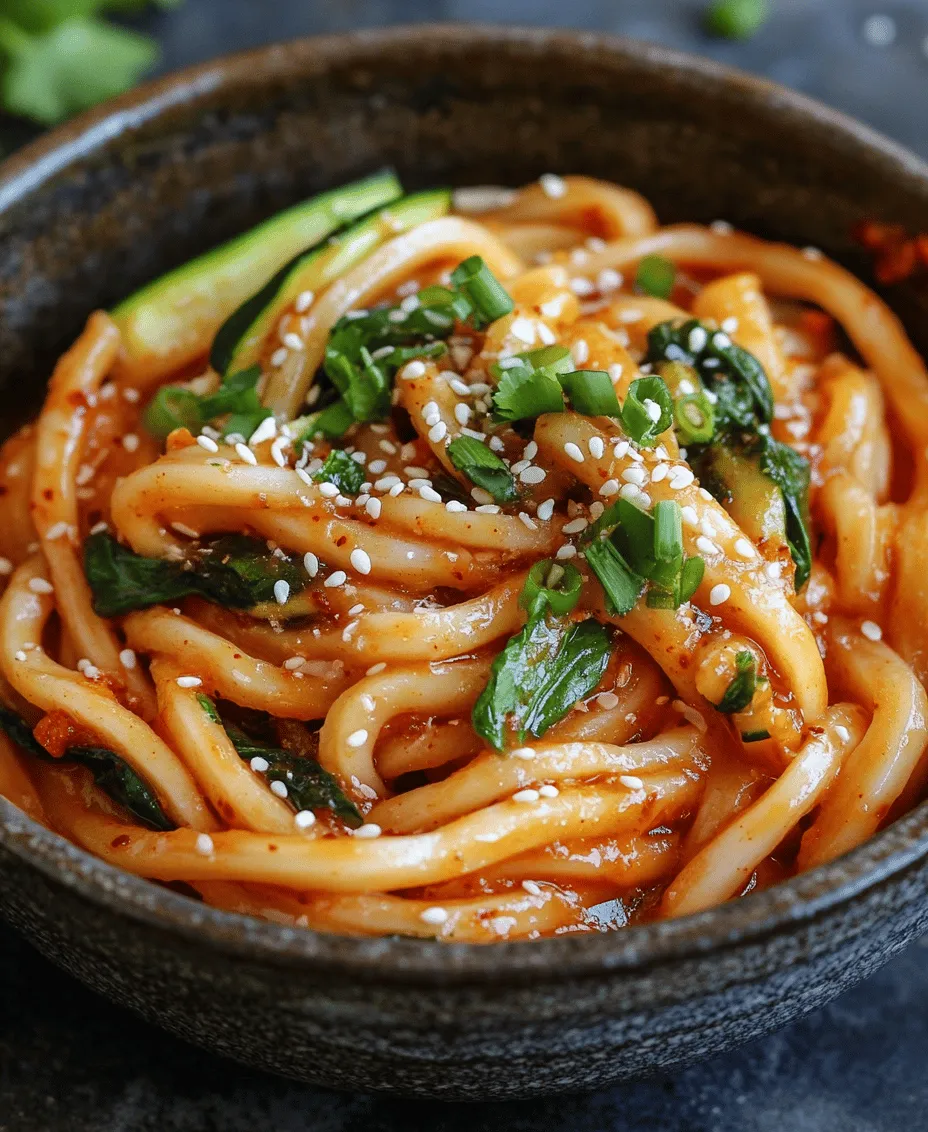
Are you ready to tantalize your taste buds with a dish that perfectly balances spice and creaminess? The <strong>Spicy & Creamy Gochujang Udon Noodles</strong> recipe is a culinary delight that brings together the rich flavors of Korean cuisine with the comforting texture of udon noodles. This dish is not just a meal; it’s an experience that promises to awaken your senses with every bite.” /></p>
</p>
<h3>Garnishes: Why They Matter for Presentation and Flavor</h3>
</p>
<p>When it comes to food, presentation can elevate a simple dish into a culinary masterpiece. Garnishes play a crucial role in enhancing both the visual appeal and the flavor profile of your Spicy & Creamy Gochujang Udon Noodles. Fresh herbs like cilantro or green onions can add a vibrant splash of color, while sesame seeds offer a subtle crunch that complements the creamy texture of the sauce. Not only do these garnishes make the dish more attractive, but they also introduce additional layers of flavor that can elevate the overall eating experience.</p>
</p>
<h3>Step-by-Step Cooking Instructions</h3>
</p>
<h4>Detailed Preparation Steps for Clarity and Ease of Understanding</h4>
</p>
<p>Before diving into the cooking process, make sure all your ingredients are prepped and ready. This includes chopping your vegetables and measuring out your sauces. Having everything organized will streamline the cooking process and help you achieve the best results.</p>
</p>
<h4>Cooking the Udon Noodles: Tips for Perfect Texture</h4>
</p>
<p>1. <strong>Boil Water</strong>: Start by bringing a large pot of salted water to a rolling boil. The salt will enhance the flavor of the noodles.</p>
</p>
<p>2. <strong>Cook the Noodles</strong>: Add the udon noodles to the boiling water and cook according to the package instructions, usually about 8-10 minutes. Stir occasionally to prevent sticking.</p>
</p>
<p>3. <strong>Check for Doneness</strong>: Taste a noodle to ensure it’s cooked to your liking. Udon noodles should be firm yet tender.</p>
</p>
<p>4. <strong>Drain and Rinse</strong>: Once cooked, drain the noodles in a colander and rinse them under cold water. This stops the cooking process and helps maintain their texture.</p>
</p>
<h4>Preparing the Sauce: Techniques for Mixing and Balancing Flavors</h4>
</p>
<p>1. <strong>Combine Ingredients</strong>: In a medium bowl, combine gochujang, soy sauce, coconut milk, and sugar.</p>
</p>
<p>2. <strong>Mix Thoroughly</strong>: Use a whisk or fork to blend the ingredients together until the mixture is smooth and creamy. Adjust the levels of gochujang and sugar to taste, balancing the spice and sweetness to your preference.</p>
</p>
<p>3. <strong>Set Aside</strong>: Once mixed, set the sauce aside to allow the flavors to meld while you sauté the vegetables.</p>
</p>
<h4>Sautéing Vegetables: Importance of Timing and Temperature</h4>
</p>
<p>1. <strong>Heat the Oil</strong>: In a large skillet or wok, heat 2 tablespoons of vegetable oil over medium-high heat until shimmering.</p>
</p>
<p>2. <strong>Add Aromatics</strong>: Start by adding minced garlic and ginger, sautéing for about 30 seconds until fragrant. Be careful not to burn them.</p>
</p>
<p>3. <strong>Vegetable Addition</strong>: Add your chopped vegetables (such as bell peppers, broccoli, and snap peas) to the pan. Stir-fry for 3-5 minutes, ensuring they remain crisp-tender. The timing is crucial; overcooked veggies lose their vibrant color and crunch.</p>
</p>
<p>4. <strong>Incorporate the Sauce</strong>: Pour the prepared sauce over the sautéed vegetables, stirring well to coat them evenly.</p>
</p>
<h4>Combining Everything: Ensuring Even Coating and Flavor Distribution</h4>
</p>
<p>1. <strong>Add the Noodles</strong>: Gently add the drained udon noodles to the skillet with the vegetable and sauce mixture.</p>
</p>
<p>2. <strong>Toss to Combine</strong>: Using tongs or two forks, carefully toss the noodles with the vegetables and sauce until everything is well combined and the noodles are evenly coated.</p>
</p>
<p>3. <strong>Heat Through</strong>: Continue to stir-fry for another 1-2 minutes to ensure the dish is heated through and the flavors are well distributed.</p>
</p>
<h3>Flavor Profile and Texture</h3>
</p>
<p>The Spicy & Creamy Gochujang Udon Noodles present a delightful combination of flavors and textures. The sauce, rich and creamy from the coconut milk, balances the heat of the gochujang, resulting in a sweet, spicy, and savory profile that tantalizes the taste buds.</p>
</p>
<p>The udon noodles provide a chewy, satisfying base, while the sautéed vegetables contribute a fresh crunch that contrasts beautifully with the creamy sauce. The dish’s versatility allows for various adaptations; consider adding proteins like grilled chicken or tofu for extra heartiness, or switch out the vegetables based on seasonal availability or personal preference.</p>
</p>
<h3>Serving Suggestions</h3>
</p>
<p>To enhance your dining experience, consider these serving suggestions:</p>
</p>
<p>– <strong>Ideal Accompaniments</strong>: Pair your udon noodles with a light cucumber salad or miso soup to complement the richness of the dish. A refreshing drink, such as iced green tea, can balance the spiciness perfectly.</p>
</p>
<p>– <strong>Presentation Tips</strong>: Serve the noodles in deep bowls to showcase their vibrant colors. Top with sliced green onions, a sprinkle of toasted sesame seeds, and a drizzle of sesame oil or chili oil for an extra flavor kick.</p>
</p>
<p>– <strong>Cultural Context</strong>: Noodle dishes are a staple in East Asian cuisine, often symbolizing longevity and prosperity. They are commonly enjoyed during celebrations and family gatherings, making this dish not only delicious but also culturally significant.</p>
</p>
<h3>Nutritional Information</h3>
</p>
<p>Each serving of Spicy & Creamy Gochujang Udon Noodles provides approximately:</p>
</p>
<p>– <strong>Calories</strong>: 500</p>
<p>– <strong>Protein</strong>: 12g</p>
<p>– <strong>Fat</strong>: 20g</p>
<p>– <strong>Carbohydrates</strong>: 70g</p>
<p>– <strong>Fiber</strong>: 4g</p>
<p>– <strong>Sugar</strong>: 6g</p>
</p>
<h4>Health Benefits of the Main Ingredients</h4>
</p>
<p>The primary ingredients in this dish offer a host of health benefits. Udon noodles, made from wheat flour, provide complex carbohydrates for energy. The gochujang adds not only flavor but also probiotics, which support gut health. Vegetables like bell peppers and broccoli are packed with vitamins A and C, essential for immune function. Coconut milk, while rich in calories, contains healthy fats that can provide sustained energy.</p>
</p>
<h4>Considerations for Dietary Restrictions</h4>
</p>
<p>For those following vegan diets, this recipe is already plant-based, making it suitable for a variety of dietary preferences. To accommodate gluten-free diets, consider using gluten-free udon noodles or alternative noodles made from rice or buckwheat.</p>
</p>
<h3>Conclusion</h3>
</p>
<p>The Spicy & Creamy Gochujang Udon Noodles are a vibrant, flavorful dish that combines the best of sweet, spicy, and creamy elements, making it a joy to prepare and enjoy. With its straightforward steps, this recipe is accessible for both novice cooks and seasoned chefs alike.</p>
</p>
<p>Not only does this dish highlight the versatility of udon noodles, but it also invites a world of flavors that can be customized to fit your taste preferences. Whether you’re cooking for a casual weeknight dinner or a special gathering, this dish is sure to impress. So gather your ingredients, roll up your sleeves, and embark on a culinary adventure that will delight your palate and brighten your dining table. Enjoy the journey of creating this delicious meal at home!</p>
</div>

Are you ready to tantalize your taste buds with a dish that perfectly balances spice and creaminess? The Spicy & Creamy Gochujang Udon Noodles recipe is a culinary delight that brings together the rich flavors of Korean cuisine with the comforting texture of udon noodles. This dish is not just a meal; it’s an experience that promises to awaken your senses with every bite.

Creamy Gochujang Udon Noodles | Easy Asian Noodle Recipes

Savor the flavors of Korea with this Spicy & Creamy Gochujang Udon Noodles recipe! Combining the rich umami of gochujang with creamy coconut milk, this dish offers the perfect balance of spice and creaminess. Quick to prepare in under 30 minutes, it's ideal for any weeknight dinner or special occasion. Don't miss out on this delicious culinary adventure! #Gochujang #UdonNoodles #SpicyFood #KoreanCuisine #QuickRecipes #HomeCooking #DeliciousDinner #Foodie

Ingredients
  

200g udon noodles

2 tablespoons gochujang (Korean chili paste)

1 tablespoon sesame oil

1 cup coconut milk

1 tablespoon soy sauce

1 tablespoon rice vinegar

2 cloves garlic, minced

1 teaspoon ginger, grated

1 teaspoon brown sugar

1 small zucchini, julienned

1 cup baby spinach

2 green onions, sliced

Sesame seeds for garnish

Fresh cilantro for garnish (optional)

Instructions
 

Cook the Udon Noodles: In a large pot of boiling water, cook the udon noodles according to package instructions until they are tender. Drain and set aside.

    Prepare the Sauce: In a medium bowl, whisk together gochujang, sesame oil, coconut milk, soy sauce, rice vinegar, minced garlic, grated ginger, and brown sugar until smooth and well combined.

      Sauté the Vegetables: In a large skillet over medium heat, add a splash of sesame oil. Once hot, add the julienned zucchini and sauté for about 2-3 minutes until slightly tender. Stir in the baby spinach and cook for an additional minute until wilted.

        Combine Noodles and Sauce: Add the cooked udon noodles to the skillet with the vegetables. Pour the gochujang sauce over the noodles and toss everything together until the noodles are well coated and heated through.

          Garnish and Serve: Remove the skillet from heat. Top with sliced green onions, sprinkle with sesame seeds, and add fresh cilantro if desired. Serve immediately and enjoy your spicy, creamy noodles!

            Prep Time: 10 minutes | Total Time: 20 minutes | Servings: 2

              WANT TO SAVE THIS RECIPE?

              Leave a Comment

              Recipe Rating