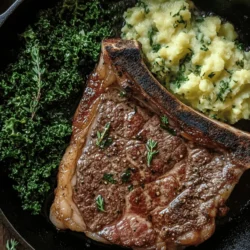

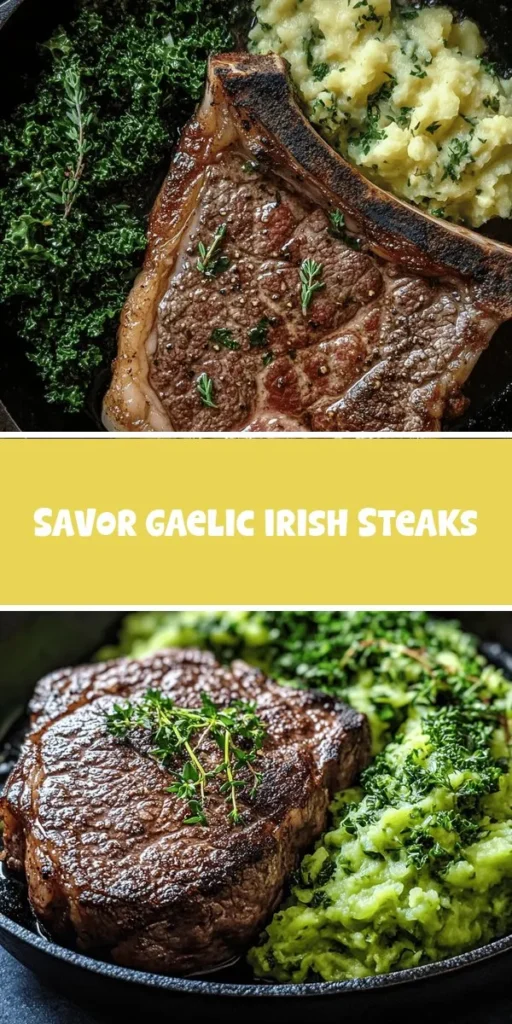
Introduction
Gaelic Irish cuisine is a tapestry woven from rich history, culture, and a profound connection to the land. It reflects the hearty spirit of the Irish people, showcasing a diverse range of ingredients that celebrate the nation’s agricultural bounty. At the heart of this culinary tradition lies the steak, a staple that has found its way into the hearts and tables of many. Renowned for its savory depth and versatility, steak in Irish cooking is more than just a meal; it’s a celebration of community, family, and cultural heritage.
In this recipe, we invite you to explore the Savor Gaelic Irish Steaks, a dish that combines the robust flavors of ribeye steaks marinated in Irish whiskey, with the traditional accompaniment of Colcannon—a beloved Irish dish made with mashed potatoes and greens. This blog post will guide you through the intricacies of preparing these flavorful steaks, highlighting the cultural significance of the ingredients and providing you with step-by-step instructions to achieve the perfect dish.
Whether you’re looking to impress at a dinner party or simply want to treat yourself to a gourmet meal at home, this recipe offers an exciting culinary adventure. By the end of this guide, you’ll not only know how to marinate and cook the perfect Gaelic Irish Steak but also how to prepare a side of Colcannon that will transport your taste buds straight to the lush hills of Ireland.
Understanding the Ingredients
Ribeye Steaks
At the foundation of this recipe is the ribeye steak—a cut of beef that is celebrated for its marbling, tenderness, and rich flavor. The ribeye is taken from the rib section of the cow, offering a perfect balance of juicy fat and lean meat. This cut is particularly favored for grilling and pan-searing, as the fat renders beautifully during cooking, resulting in a steak that is succulent and bursting with flavor.
When selecting ribeye steaks, look for cuts that have a vibrant red color and a good amount of marbling. The intramuscular fat not only enhances the taste but also contributes to the steak’s tenderness. A well-cooked ribeye should have a nice crust on the outside while remaining juicy and tender on the inside, making it an ideal choice for this Gaelic-inspired dish.
The Role of Irish Whiskey
No dish captures the essence of Irish cuisine quite like one that incorporates Irish whiskey. In this recipe, the whiskey serves as a marinade that elevates the flavor of the ribeye steaks. The rich, caramel notes of the whiskey pair perfectly with the savory meat, infusing it with a unique depth that is both complex and comforting.
Marinating the steaks in Irish whiskey not only enhances the flavor but also helps to tenderize the meat. The alcohol content breaks down the proteins in the steak, resulting in a more tender final product. When choosing a whiskey for your marinade, opt for a high-quality Irish whiskey, such as Jameson or Bushmills, which are known for their smoothness and rich flavor.
Fresh Herbs: Thyme and Rosemary
Fresh herbs play a crucial role in enhancing the flavors of this dish. Thyme and rosemary are traditional herbs that complement the rich taste of the ribeye perfectly. Thyme, with its earthy and slightly minty flavor, adds a subtle depth that elevates the overall profile of the steak. Rosemary, on the other hand, brings a bold, pine-like aroma that pairs beautifully with the meaty notes of the ribeye.
When using fresh herbs, always opt for the freshest possible to ensure maximum flavor. You can either chop these herbs finely and mix them into the marinade or use whole sprigs to infuse the flavor more subtly during cooking. The combination of thyme and rosemary provides a fragrant backdrop that aligns perfectly with the essence of Gaelic cooking.
Colcannon: A Traditional Irish Dish
As a side dish for our Gaelic Irish Steaks, we cannot overlook Colcannon—a traditional Irish dish that has been enjoyed for generations. Colcannon is a comforting mash made primarily of potatoes, combined with either kale or cabbage, and enriched with butter and cream. This dish is a staple at Irish tables, particularly during festive occasions and family gatherings, symbolizing warmth and togetherness.
The creamy texture of Colcannon contrasts beautifully with the robust flavors of the ribeye steaks, creating a harmonious balance on your plate. The greens add a touch of freshness and nutrition, making it a well-rounded meal. When preparing Colcannon, you can choose between kale and cabbage; each brings its own unique flavor to the dish. Kale offers a slightly earthy taste, while cabbage provides a sweeter, milder flavor.
The Significance of Butter and Garlic
In many Irish recipes, butter is an essential ingredient that adds richness and depth to dishes. In this recipe, butter will be used not only in the Colcannon but also as a finishing touch for the steaks. The use of high-quality Irish butter, known for its creamy texture and rich flavor, can elevate your dish significantly.
Garlic is another key player that enhances the overall flavor profile. Its aromatic, pungent qualities infuse the steak and Colcannon with a warm, inviting taste. Whether incorporated into the marinade for the steaks or sautéed with the potatoes and greens for the Colcannon, garlic brings a comforting element to this hearty dish.
Marinating the Steaks
Step-by-Step Guide to Creating the Marinade
Creating the marinade for your Gaelic Irish Steaks is a straightforward process that requires just a few key ingredients. Here’s how to do it:
1. Gather the Ingredients: For the marinade, you will need:
– 1 cup of Irish whiskey
– 2 tablespoons of fresh thyme, chopped
– 2 tablespoons of fresh rosemary, chopped
– 4 cloves of garlic, minced
– Salt and pepper to taste
2. Mix the Marinade: In a medium-sized bowl, combine the Irish whiskey, chopped thyme, chopped rosemary, and minced garlic. Season the mixture with salt and pepper to taste. Whisk the ingredients together until well combined.
3. Prepare the Steaks: Place your ribeye steaks in a resealable plastic bag or a shallow dish. Pour the marinade over the steaks, ensuring they are fully coated. Seal the bag or cover the dish with plastic wrap.
4. Marinate: For optimal flavor and tenderness, marinate the steaks in the refrigerator for at least 2 hours, but ideally, let them soak for up to 12 hours. The longer the steaks marinate, the more pronounced the flavors will be.
Explanation of How Marinating Affects Flavor and Tenderness
Marinating is an essential technique in cooking that serves multiple purposes. First and foremost, it enhances the flavor of the meat, allowing the marinade’s ingredients to penetrate the steak. The combination of Irish whiskey, herbs, and garlic creates a complex flavor profile that complements the natural taste of the ribeye.
Additionally, marinating helps to tenderize the meat. The acid in the whiskey and the enzymes from the herbs work to break down tough proteins, resulting in a more tender steak. This process not only improves the texture but also ensures that every bite is juicy and flavorful.
Recommended Marinating Time for Optimal Results
For the best results, it is recommended to marinate your ribeye steaks for at least 2 hours, though overnight is preferred. This extended marination time allows the flavors to meld and will yield the most tender and flavorful steaks. If you’re short on time, even a 30-minute marinade can enhance the flavor significantly, but the longer the marination, the better the results.
Tips for Selecting Quality Ingredients, Especially Irish Whiskey
When it comes to preparing Gaelic Irish Steaks, the quality of your ingredients matters immensely. Here are some tips for selecting the best ingredients:
– Ribeye Steaks: Always choose well-marbled ribeye steaks from a reputable butcher. Look for cuts with a bright red color and good fat distribution.
– Irish Whiskey: Opt for a quality Irish whiskey that you would enjoy drinking. This ensures that the flavors imparted into the steak will be pleasant. Brands like Jameson or Bushmills offer smooth, flavorful options.
– Fresh Herbs: Purchase fresh herbs from a local market or grocery store. Avoid dried herbs, as they lack the vibrant flavor of fresh ones.
– Butter: Use high-quality Irish butter for the best results in both flavor and texture.
Preparing Colcannon
Detailed Instructions for Making Traditional Colcannon
Colcannon is a delightful accompaniment to your Gaelic Irish Steaks, and preparing it is quite simple. Follow these steps to create a traditional Colcannon:
1. Ingredients Needed:
– 2 pounds of potatoes, peeled and quartered
– 1 cup of kale or cabbage, finely chopped
– 4 tablespoons of Irish butter
– 1/2 cup of cream or milk (adjust for desired creaminess)
– Salt and pepper to taste
2. Cook the Potatoes: Begin by placing the peeled and quartered potatoes in a large pot. Cover them with cold water, add a pinch of salt, and bring to a boil. Cook until the potatoes are fork-tender, about 15-20 minutes.
3. Sauté the Greens: While the potatoes are cooking, melt 2 tablespoons of Irish butter in a skillet over medium heat. Add the chopped kale or cabbage and sauté until softened, about 5-7 minutes. Season with a little salt and pepper.
4. Mash the Potatoes: Once the potatoes are cooked, drain them and return them to the pot. Add the sautéed greens, remaining butter, and cream (or milk). Mash everything together until you achieve a smooth, creamy consistency. Adjust seasoning with salt and pepper to taste.
5. Serve: Transfer the Colcannon to a serving dish, creating a well in the center. You can add a knob of butter in the well for an extra touch of indulgence.
Variations of Colcannon: Kale vs. Cabbage and Their Flavor Profiles
While the classic version of Colcannon usually features either kale or cabbage, each green brings its own unique flavor profile to the dish:
– Kale: This leafy green offers a more robust, earthy flavor, making it an excellent match for the savory notes of the ribeye steak. Kale retains a slight chewiness, providing texture in every bite of Colcannon.
– Cabbage: On the other hand, cabbage has a milder, sweeter flavor that results in a creamier mash. It blends seamlessly with the potatoes, creating a comforting and familiar taste that’s beloved in many Irish households.
Ultimately, the choice between kale and cabbage comes down to personal preference. Both variations are delicious and will complement your Gaelic Irish Steaks beautifully.
In the next part of this article, we will guide you through the cooking process for the marinated ribeye steaks, tips for achieving the perfect sear, and how to plate your dish for an impressive presentation. Stay tuned for the full culinary experience that will have you savoring every bite of this authentic Irish meal.
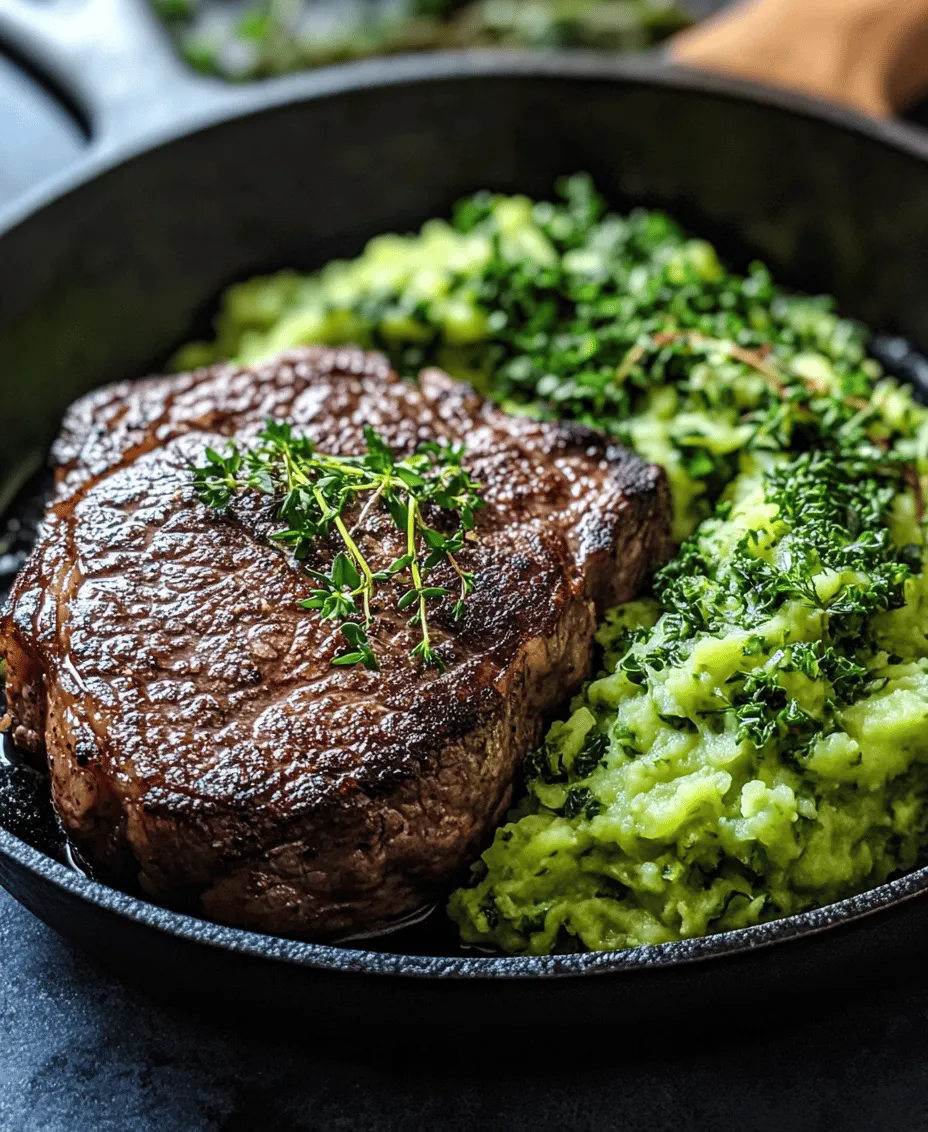
Nutritional Benefits of Colcannon as a Side Dish
Colcannon, a traditional Irish dish made primarily from mashed potatoes and cabbage or kale, is not only a comforting staple but also packed with nutritional benefits. Potatoes are an excellent source of vitamins C and B6, potassium, and dietary fiber. The addition of cabbage or kale enhances the dish’s nutritional value, providing antioxidants, vitamins K and C, and essential minerals. This combination supports digestive health and boosts immunity while offering a hearty, satisfying side that complements the rich flavors of Gaelic Irish Steaks.
Keeping Colcannon warm for serving is essential to maintain its creamy texture and delicious taste. As it cools, the potatoes can become dense and less appealing. To keep Colcannon warm, consider placing it in a covered pot over low heat or in a warm oven while you prepare the steaks. This practice ensures that when it’s time to serve, your Colcannon is as delightful as your perfectly cooked steak.
Cooking the Perfect Steak
When it comes to cooking steak, the method you choose can drastically affect the flavor and texture of the meat. Using a cast-iron skillet is highly recommended due to its superior heat retention and even heat distribution. This type of skillet allows for a perfect sear, creating a flavorful crust while keeping the inside tender and juicy. Preheat your cast-iron skillet over medium-high heat before adding oil to ensure that it is hot enough to achieve that coveted caramelized exterior.
Recommended cooking temperatures vary depending on the desired doneness. For a medium-rare steak, aim for an internal temperature of 130-135°F (54-57°C). For medium, look for 140-145°F (60-63°C), and for medium-well, 150-155°F (65-68°C). An instant-read thermometer is your best friend in this process. To achieve the desired doneness, sear the steak for 3-5 minutes on each side, depending on its thickness.
The science behind a perfect crust involves the Maillard reaction, which occurs when amino acids and reducing sugars react under high heat. This reaction not only enhances the flavor but also adds a satisfying texture. To maximize this effect, make sure the steak is dry before seasoning it. Patting the meat with paper towels removes excess moisture, allowing for a better sear.
After cooking, resting the steak is crucial for juicy results. Allowing the meat to rest for about 5-10 minutes after cooking lets the juices redistribute throughout the steak. If you slice into it immediately, those precious juices will escape, leaving you with a dry piece of meat. Cover the steak loosely with foil while resting to keep it warm.
Serving the Dish
Presentation plays a pivotal role in enhancing the dining experience. When plating Gaelic Irish Steaks, consider a clean and elegant approach. Start with a generous scoop of warm Colcannon in the center of the plate, then place the steak alongside it, allowing the two to complement each other visually. Drizzle some of the pan juices over the steak and Colcannon for added moisture and flavor. A sprinkle of freshly chopped parsley not only adds a burst of color but also a fresh flavor that balances the richness of the dish.
Complementary side dishes can elevate your meal further. Consider serving a light arugula salad dressed with lemon vinaigrette to balance the heartiness of the steak and Colcannon. For beverages, a robust red wine like a Cabernet Sauvignon or a classic Irish stout can enhance the flavors of the dish, providing a delightful pairing that completes the experience.
Drizzling pan juices over the steak is an excellent way to introduce extra flavor and moisture. After cooking the steak, you’ll notice flavorful drippings left in the skillet. These can be enhanced with a splash of red wine or beef broth, gently simmered to create a sauce. Pouring this over the steak not only adds depth to the taste but also keeps the meat succulent.
Fresh parsley serves more than just a decorative purpose. Its bright and slightly peppery flavor complements the richness of the steak and the buttery nature of the Colcannon. A simple sprinkle of finely chopped parsley just before serving can elevate the dish’s overall presentation and flavor.
Cultural Context and Heritage
The history of steak and Colcannon in Irish culture is deeply rooted in the nation’s agricultural practices and culinary traditions. Steak has long been a symbol of Irish hospitality, often reserved for special occasions and gatherings. Meanwhile, Colcannon has humble origins, emerging as a peasant food that utilized readily available ingredients. Its significance has evolved, now enjoyed across all demographics as a comforting, traditional dish.
The use of traditional ingredients in modern cooking highlights the importance of honoring heritage while embracing innovation. By utilizing locally sourced produce and quality meats, chefs and home cooks alike can create dishes that pay homage to Ireland’s rich culinary past while allowing for personal interpretations. This fusion of old and new is what makes Irish cuisine so beloved, fostering a sense of community and connection through shared meals.
This dish reflects the heart of Irish hospitality, where food is not just sustenance but a means of bringing people together. Sharing a meal of Gaelic Irish Steaks and Colcannon embodies the warmth of Irish culture, inviting family and friends to gather around the table and celebrate life’s moments, big and small.
Conclusion
Preparing Gaelic Irish Steaks involves more than just cooking; it’s about embracing a culinary tradition rich in flavor, history, and connection. From the nutritional benefits of Colcannon as a delightful side dish to the meticulous art of cooking the perfect steak, each component plays a vital role in creating a memorable meal. The techniques discussed, such as using a cast-iron skillet and allowing the steak to rest, are essential for achieving the best results.
As you explore this traditional recipe, feel free to make personal adaptations that reflect your taste. Cooking is an art that thrives on creativity and innovation, and your unique touches can enhance the experience. Ultimately, the joy of cooking and sharing meals with loved ones is what makes any dish truly special. So, gather your ingredients, invite your friends or family, and get ready to savor the heartwarming flavors of Gaelic Irish Steaks.